In any homeowners association, rules and enforcement are meant to protect property values, maintain community standards, and ensure fairness for all residents. However, those responsibilities must be handled transparently, ethically, and by the appropriate parties.
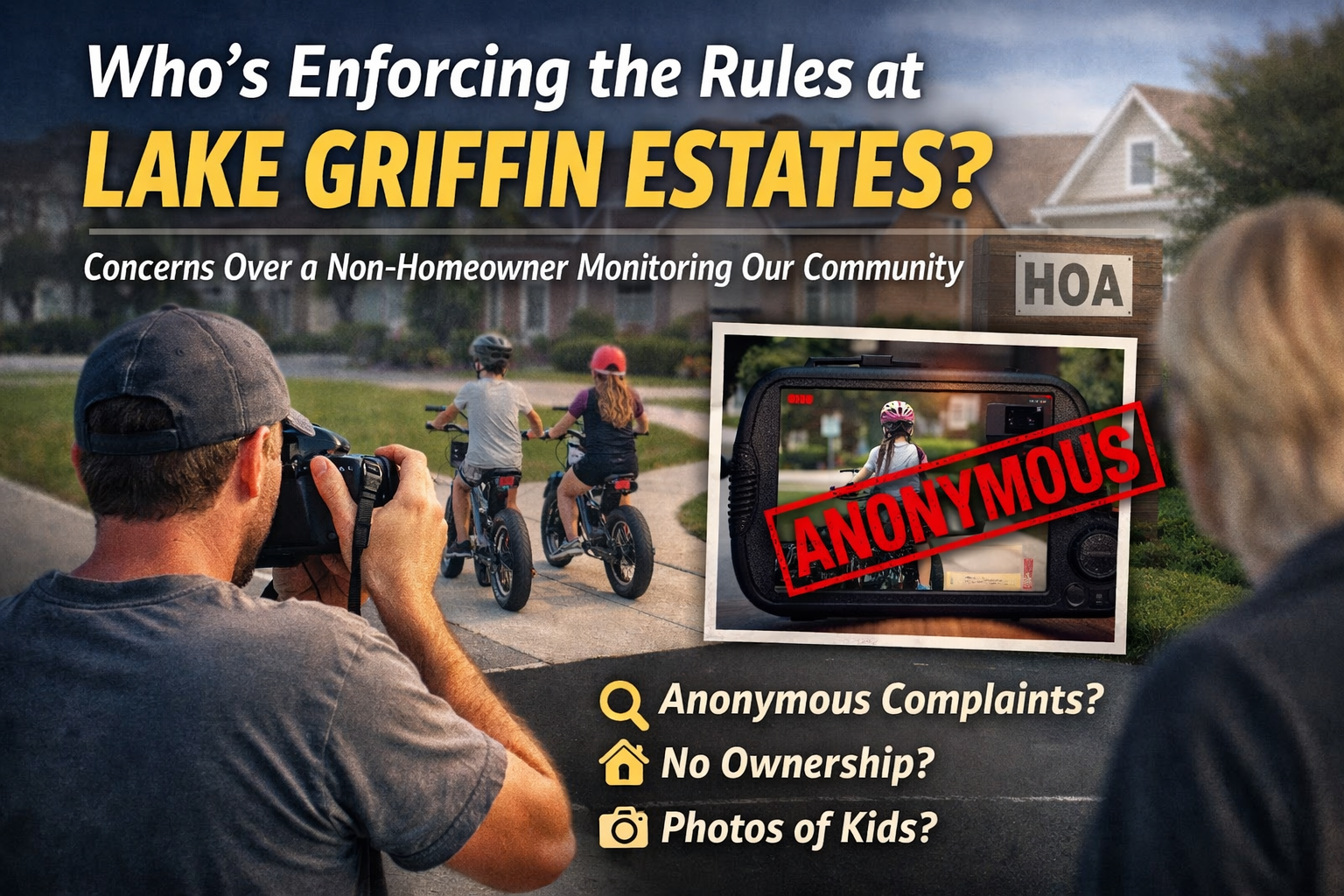
Recently, a concerning pattern has come to light within our community involving HOA President Krista and the use of her son-in-law, who is not a homeowner, to identify and report violations.
What We Observed
Multiple instances suggest that Krista’s son-in-law, a renter with no ownership stake in the community, has been actively:
- Monitoring residents
- Taking photos of potential violations
- Submitting complaints anonymously
- Triggering enforcement actions against homeowners
This raises an immediate and important question. Why is someone who does not own property here involved in policing those who do?
When this was brought directly to the President, the response given was that he “has an interest in the rules.”
That explanation leaves more questions than answers.
Why This Raises Concern
There are several reasons why this situation may be inappropriate or harmful to the integrity of our community:
1. Lack of Standing or Authority
HOA enforcement is typically reserved for:
- Board members
- Property management
- Authorized compliance personnel
A non-homeowner, especially a relative of a board member, has no official authority to enforce or monitor violations.
2. Potential Conflict of Interest
Allowing a family member of the HOA President to participate in enforcement creates a clear perception of bias and favoritism. Even if intentions are claimed to be neutral, the optics alone undermine trust.
3. Anonymous Reporting Concerns
If violations are being submitted anonymously by someone closely connected to leadership, it removes accountability and opens the door to selective or targeted enforcement.
4. Privacy and Safety Issues
Perhaps most concerning, there have been reports of this individual taking photos of children in the community, specifically to report e-bike usage violations to their parents.
This crosses a line for many residents.
Parents should not have to worry about unknown individuals photographing their children under the justification of HOA enforcement.
5. Unequal Enforcement Risk
When enforcement originates from unofficial individuals rather than a structured process, it creates the risk that:
- Some residents are targeted more than others
- Rules are applied inconsistently
- Personal relationships influence outcomes
Why This Matters
HOAs function best when there is trust between the board and the community. That trust depends on:
- Transparency in decision-making
- Fair and consistent enforcement
- Clear boundaries on who has authority
When those lines are blurred, it affects every homeowner.
Questions the Community Should Be Asking
- Who is officially authorized to report and enforce violations?
- Are anonymous complaints being accepted, and under what rules?
- Is it appropriate for non-residents to be involved in enforcement activities?
- What safeguards are in place to protect residents, especially children, from being photographed?
Moving Forward
This issue has reportedly been ongoing for some time, and it deserves open discussion. The goal is not to create conflict, but to ensure that enforcement practices align with fairness, transparency, and the governing documents of the association.
Homeowners have a right to understand how rules are being enforced and by whom.
And more importantly, they have a right to expect that those enforcing the rules are doing so appropriately.
Comments
No comments yet.
Want to join the conversation? Sign in or create an account — comments are for registered members only.