
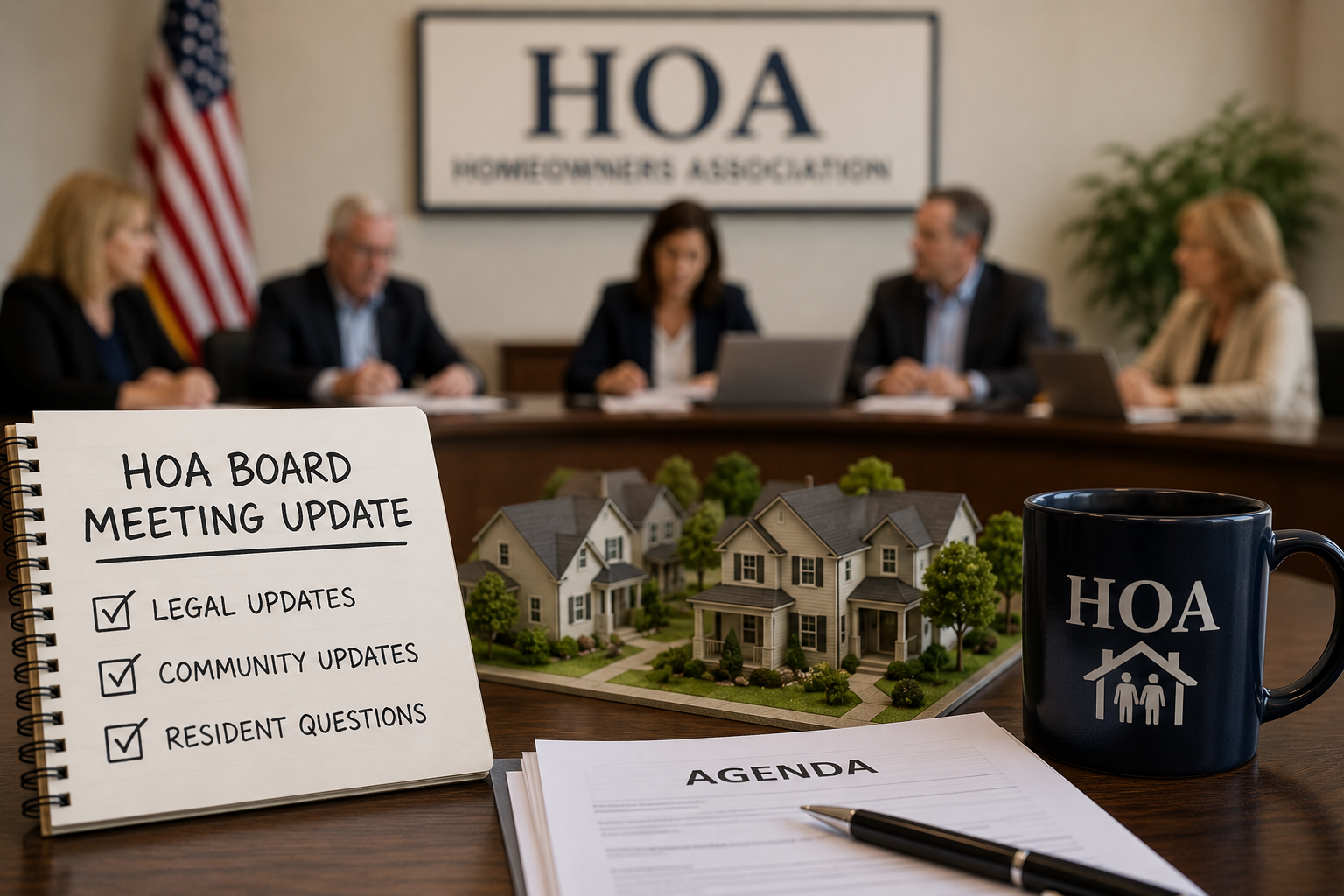
The latest Lake Griffin Estates HOA board meeting included a Q&A session with attorney Sean Reed of the Ruggieri Law Firm, where much of the discussion focused not on resolving homeowner concerns, but on explaining why the board does not have to respond to them.
Several residents, including myself, have sent certified letters requesting clarification on how certain rules are interpreted and enforced, especially the controversial battery-powered vehicle rule involving children. Instead of addressing those concerns directly, the meeting largely centered around what the board is legally not obligated to do.
The Board’s Position: “We Don’t Have to Answer You”
Attorney Sean Reed stated that while homeowners are entitled to official records requests under Florida Statute 720, the board is not required to answer general inquiries or certified letters asking for clarification on rules or enforcement interpretations.
That distinction is important because many homeowners were not asking for random opinions. We were asking how the board interprets vague rules that are actively being enforced against residents.
This continues a pattern many residents have noticed:
- Homeowners ask for clarification
- The board routes everything through management or legal counsel
- Direct communication is avoided
- Questions go unanswered while enforcement continues
At some point, residents have to ask:
Why is there more effort spent justifying silence than actually providing transparency?
The Battery-Powered Vehicle Rule Still Raises Major Questions
Attorney Reed defended the board’s resolution requiring adult supervision for children using battery-powered vehicles such as ebikes, scooters, and mini ATVs. According to him, supervision means having “eyes on the child” from a reasonably close distance, such as from a garage or nearby lot.
But this explanation still leaves major unanswered questions:
- What legally defines a “child”?
- What distance qualifies as “reasonable proximity”?
- What happens when different board members interpret the rule differently?
- Why are homeowners receiving violations for situations that now appear to be considered acceptable?
During open forum, I raised the issue directly because I had previously received a violation while supervising my child from my garage. Ironically, the board then acknowledged during the meeting that supervision from a garage is acceptable if the child remains visible.
That alone demonstrates the exact concern homeowners have been raising:
The rule is vague and has been interpreted inconsistently.
The issue was never whether the HOA can create rules related to safety. The issue is how those rules are interpreted, communicated, and enforced fairly.
Missing Transparency in HOA Governance
Another troubling takeaway from the meeting was the explanation regarding meeting minutes.
Attorney Reed stated that HOA minutes are only meant to document actions and votes, not homeowner discussions or detailed conversations. While technically true in many cases, residents have raised concerns that important context and statements made by board members are missing from meeting records entirely.
This becomes especially concerning when:
- Board members publicly question whether a matter should become a monetary enforcement issue
- Residents raise concerns during meetings
- Rules are discussed one way publicly, but enforced another way afterward
Yet later, the official minutes often reduce the entire discussion to vague summaries like “questions answered.”
For a community asking for accountability and consistency, that is not transparency.
A Growing Disconnect Between the Board and Homeowners
The overall tone of the meeting reinforced what many residents have been feeling for some time:
This board appears more focused on protecting itself procedurally rather than engaging openly with homeowners.
Instead of working collaboratively to clarify vague rules and reduce conflict, residents are increasingly met with:
- Attorneys
- Technicalities
- Management barriers
- Legal positioning
- Minimal communication
Homeowners should not have to fight for basic clarification on rules that can lead to violations, legal notices, or financial penalties.
Transparency should not feel adversarial.
Accountability should not require certified letters.
And residents asking questions should not be treated like a legal inconvenience.
Watch the entire meeting below:
Comments
No comments yet.
Want to join the conversation? Sign in or create an account — comments are for registered members only.